

“Wait, Coconut Oil Can Help Your Brain?!”
Imagine this: you’re in your kitchen, about to fry some eggs. You reach for the coconut oil. But what if I told you that same coconut oil is also tagged ‘ coconut oil for alzhneimer’s andbrain health —yes, the one in your pantry—might hold the key to protecting your brain from Alzheimer’s?
Sounds crazy, right?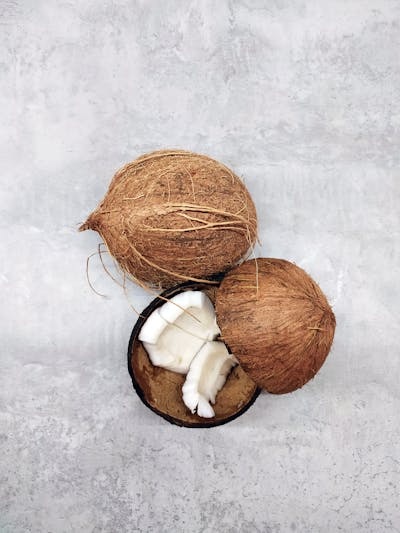
But across the world, scientists, doctors, and families are waking up to a stunning possibility: coconut oil for Alzheimer’s and brain health might just be nature’s secret weapon. It’s natural, affordable, and surprisingly powerful.
This isn’t snake oil. It’s coconut oil. And it’s making waves in the medical world.
What Makes Coconut Oil So Special?
Coconut oil comes from—you guessed it—coconuts. It’s made by pressing the meat of the coconut until the oil separates out.
Now here’s the kicker: over 60% of coconut oil is made up of medium-chain triglycerides, or MCTs. These MCTs are the superstars behind the magic.
Your brain loves MCTs because they turn into something called ketones—tiny fuel molecules that your brain can use for energy, especially when it’s struggling to process sugar (which happens a lot in Alzheimer’s patients).
According to Dr. Mary Newport, a U.S. neonatologist whose husband had early-onset Alzheimer’s, adding coconut oil to his diet led to major improvements in memory and mood.
Citation: Dr. Mary Newport’s Case Study
What Does the Science Say?
Coconut oil isn’t a cure. But research is showing it might slow down the damage caused by Alzheimer’s and help improve mental function in some cases.
Here’s what scientists are learning:
1. Ketones Feed the Brain
When your brain can’t use sugar well (a common problem in Alzheimer’s), ketones from coconut oil give it backup energy.
According to a study in the journal Neurobiology of Aging, giving MCTs to people with mild cognitive issues improved their memory scores within 90 minutes.
Citation: https://pubmed.ncbi.nlm.nih.gov/15123336/
2. MCTs May Reduce Brain Inflammation
Alzheimer’s isn’t just about memory loss—it’s also about inflammation in the brain. Coconut oil’s natural compounds may help calm that inflammation.
A study published in Frontiers in Neuroscience found that coconut oil can reduce inflammation and oxidative stress in brain cells, which helps protect neurons.
Citation: https://www.frontiersin.org/articles/10.3389/fnins.2017.00010/full
3. Better Focus and Mood? Yes, Please!
Even for people without Alzheimer’s, coconut oil might improve mental clarity, focus, and energy. The ketones help the brain work more efficiently.
Dr. Bruce Fife, author of “Stop Alzheimer’s Now!”, explains that coconut oil may help sharpen the brain in aging adults—even those without a diagnosis.
Citation: https://www.piccadillybooks.com/stopalzheimersnow.htm
How to Add Coconut Oil to Your Diet (The Tasty Way!)
Coconut oil is easy to use, and let’s be real—it smells amazing. Here are a few fun and delicious ways to sneak it into your meals:
-
Cook with it: Use it instead of vegetable oil for frying eggs or sautéing veggies.
-
Blend it: Add a teaspoon to your smoothie or morning coffee for a creamy texture.
-
Spread it: Use it on toast like butter. Add cinnamon for a bonus brain-boost!
-
Stir it into rice or oatmeal: Adds flavor and good fats.
Important Note: Start small. Too much coconut oil at once might cause stomach upset. Begin with 1 teaspoon per day, then gradually increase to 1–2 tablespoons per day.
What Doctors Are Saying: Is It Safe?
Most experts agree that coconut oil is safe in moderation. But just like anything, balance is key.
According to the Harvard School of Public Health, coconut oil raises both good (HDL) and bad (LDL) cholesterol, so people with heart issues should talk to their doctor first.
Citation: https://www.hsph.harvard.edu/nutritionsource/food-features/coconut-oil/
Real People, Real Stories
Thousands of people have shared their coconut oil stories online. Some saw better memory. Some saw clearer thinking. Some just felt more awake.
One of the most talked-about cases is Steve Newport, the husband of Dr. Mary Newport. After adding coconut oil to his diet, his memory improved so much that he could once again read and complete tasks he couldn’t before.
“It was like someone turned the lights back on in his brain,” said Dr. Newport.
While not every story is the same, these stories give us hope—and that’s powerful.
What Is Alzheimer’s, Anyway?
If you’re still wondering, here’s the simple version: Alzheimer’s is a disease that causes the brain to slowly forget how to work.
It starts with short-term memory loss, then spreads. People forget names, dates, how to cook, where they live—even the people they love.
There is no known cure. But that’s why natural tools like coconut oil for Alzheimer’s and brain health matter. They offer hope.
Quick FAQ: Coconut Oil and Brain Health
Q: Is coconut oil a cure for Alzheimer’s?
A: No. But it may help slow symptoms or improve focus in some people.
Q: How much should I take daily?
A: Start with 1 teaspoon and work up to 1–2 tablespoons.
Q: Can I give it to my elderly parents?
A: Yes—but talk to a doctor first, especially if they have heart conditions.
Q: What type of coconut oil is best?
A: Use organic, virgin, cold-pressed coconut oil for the most benefits.
Final Thoughts: The Brain Miracle in a Jar
Coconut oil isn’t a miracle in the magic-wand sense. But it’s natural, safe, and powerful. When it comes to Alzheimer’s and brain health, every little edge helps—and this one is sitting right on your kitchen shelf.
So go ahead: stir a little into your tea. Fry your eggs in it. Share it with your parents.
Because when it comes to protecting your brain, the best solution might not be hidden in a lab—it might just be hiding in a coconut.
Sources & Scientific References
-
Harvard T.H. Chan School of Public Health – Coconut Oil Overview
-
Dr. Mary Newport – Coconut Oil and Alzheimer’s Story
-
Neurobiology of Aging – MCTs and Memory Study
-
Frontiers in Neuroscience – Coconut Oil & Brain Inflammation
-
Dr. Bruce Fife – Stop Alzheimer’s Now!
Do you make top-grade coconut oil anywhere in africa but struggling to make sales – talk to us today – register & lets take those products global – if it meets our quality standards.
About The Author