
The Game Changer: How Dangote Refinery Is Ending Nigeria’s 50-Year Fuel Crisis
click play to listen to full article
Imagine this for a moment. You live in a country that is one of the biggest producers of crude oil in the entire world. Black gold flows from your soil. Yet, for your entire life, and your parents’ lives, you’ve had to queue for hours, sometimes even days, just to buy petrol for your car or your generator. It’s a painful irony that has defined Nigeria for half a century.
Now, imagine that nightmare is finally ending.
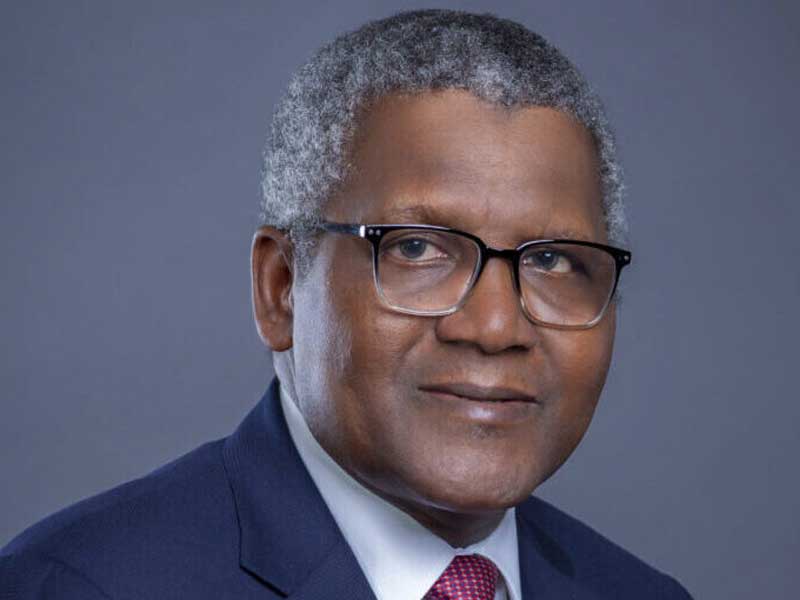
That is the incredible story unfolding in Nigeria today. It’s a story of audacious ambition, national pride, and the sheer willpower of one man, Aliko Dangote. His colossal oil refinery, a sprawling giant on the Lagos coastline, is not just a factory. It’s a promise being fulfilled. After just one year of producing petrol, Dangote is declaring the end of Nigeria’s 50-year-long fuel queue crisis.
This isn’t just about making it easier to fill up your tank. This is about rewriting Nigeria’s economic destiny. It’s a tale of saving billions of dollars, creating tens of thousands of jobs, and finally, making the nation’s vast oil wealth work for its people. Let’s break down this monumental shift and what it truly means.
The Billion-Dollar Bleed You’ve Never Heard Of
Before we get to the good news, we need to understand the problem. For decades, Nigeria has been stuck in a bizarre and costly loop. It would extract its high-quality crude oil, put it on massive ships, and send it thousands of miles away to refineries in Europe, Asia, or America. Then, it would buy back the refined petrol, diesel, and jet fuel at a much higher price and ship it all the way back.
This process was not only inefficient, but it was also incredibly expensive. One of the biggest hidden costs was something called demurrage.
So, what is demurrage? Let’s make it simple.
Think of it like a late fee for a library book, but on a massive scale. When a giant ship carrying imported fuel arrives at a Nigerian port, it has a limited number of “free days” to unload its cargo. As explained by logistics experts at Ronish Nigeria Limited, this is usually between 3 to 5 days. If the ship can’t unload in time due to port congestion, paperwork delays or other inefficiencies; the shipping company starts charging a daily penalty. This penalty is demurrage.
Read & Shop: Our 2kg Packs of our signature Cocoyam flour Globally to your door.
These fees are not small change. They can be tens of thousands of dollars per ship, per day. Now, multiply that by the dozens of ships waiting to offload fuel for a nation of over 200 million people. The numbers quickly become staggering.
Aliko Dangote has put a figure on this national waste. He states that his refinery is now saving Nigeria a jaw-dropping $1 billion every single year in demurrage costs alone. That’s a billion dollars that is no longer being paid to foreign shipping companies. A billion dollars that can now stay in Nigeria to be invested in schools, hospitals, and roads. It’s a financial hemorrhage that has finally been stopped.
Ending a 50-Year-Old National Embarrassment
The fuel crisis in Nigeria wasn’t just about money. It was a deep, psychological wound. The queues, which Dangote rightly notes have been a problem since 1975, were a constant, visible reminder of the nation’s broken system. It was a paradox that baffled everyone: an oil-rich nation that couldn’t provide fuel for its own citizens.
The root of the problem was the collapse of Nigeria’s state-owned refineries. As detailed in a historical analysis by PwC, Nigeria institutionalized a fuel subsidy in the 1970s to keep petrol prices low. While noble in theory, this system became a hotbed for corruption and mismanagement. Over time, the country’s own refineries fell into disrepair, forcing it to become almost entirely dependent on imports.
This dependency created a powerful and entrenched system of importation. It benefited international traders and local marketers who profited from the lucrative import contracts. Dangote himself has spoken about the fierce resistance he faced from these groups. “The international traders and the local marketers all connive to suffocate any refinery,” he declared. “What happened to textiles is exactly what they want to do to refining. They don’t want Nigeria to stand on its own.”
But with the Dangote Refinery now producing a massive 650,000 barrels per day, the game has fundamentally changed. The refinery has the capacity to meet 100% of Nigeria’s domestic demand for all refined products. This includes 57 million liters of gasoline, 27 million liters of diesel, and 11 million liters of kerosene every single day.
Read & Shop: Our 1kg Export Cans of our signature Cocoyam flour Globally to your door.
The impact is already being felt. The infamous queues have vanished. The price of petrol has begun to fall in several states. Nigeria is no longer at the mercy of global supply chains and volatile import prices. As energy analyst Dan Kunle told ARISE NEWS, the Dangote Refinery is a “game-changing project that has transformed Nigeria’s energy landscape.”
More Than Just Fuel: A Ripple Effect of Prosperity
The benefits of this mega-project ripple out far beyond the petrol station. It is a powerful engine for economic growth and opportunity.
First, let’s talk about foreign exchange. For years, Nigeria had to spend a huge portion of its precious foreign currency reserves, mostly U.S. dollars, to pay for imported fuel. This put constant pressure on the national currency, the Naira. Now, the situation is reversing. Not only is Nigeria saving those dollars, but the refinery has also begun exporting its surplus fuel. Between June and September 2025 alone, the facility exported over 1.1 billion liters of petrol. This brings in a steady stream of foreign currency, strengthening the Naira and stabilizing the economy.
Then there’s job creation. This is perhaps the most tangible benefit for the average person. The refinery itself is a massive employer. But the real magic is in the downstream effect. To distribute the fuel efficiently across the country, Dangote is deploying a fleet of 10,000 trucks powered by Compressed Natural Gas (CNG). This single initiative is expected to create at least 24,000 new jobs for drivers, mechanics, and logistics staff. These are not just jobs; they are lifelines for families and communities.
Dangote has emphasized that these are good jobs. He has stated that his employees earn salaries that are three times the national minimum wage, along with comprehensive benefits. This sets a new standard for industrial employment in the country.
Read – Shop: Our Coconut Oil – 500ml Packs and more – Worldwide
The Man and His Vision: An “Africa First” Philosophy
To understand this project, you have to understand the man behind it. Aliko Dangote’s vision extends far beyond Nigeria. He is a passionate advocate for the industrialization of the entire African continent. His core belief is simple and powerful: “Africans will develop Africa.”
He has often spoken against the continent’s tendency to export raw materials only to import finished goods at a higher price. “Don’t come and take my cocoa, process it [overseas], then come and sell the chocolate to me for 20 times the cost,” he has famously said. His philosophy is about adding value at home, processing African resources on African soil to create African jobs and build African wealth.
The refinery is the ultimate expression of this philosophy. He faced immense skepticism. He admitted that experts, investors, and even government officials warned him that a project of this scale was too risky for a private company. But his belief in Nigeria and Africa never wavered. “If it had gone wrong, lenders would have taken our assets,” he confessed. “But we believed in Nigeria and Africa.”
This belief is now paying off, not just for his company, but for an entire nation. His next goals are just as ambitious. He plans to make Nigeria the world’s leading producer of fertilizer and a major exporter of polypropylene, a key ingredient in plastics. “Nigeria has now become the refining hub of Africa,” he declared.
This is a story that is still being written. But its opening chapters are filled with hope. It is a story of how one person’s audacious dream can solve a nation’s chronic nightmare. The end of the fuel queues is more than just a convenience; it’s a symbol. It’s a sign that Nigeria is finally taking control of its own destiny, building a future where its immense wealth translates into real prosperity for its people. It took 50 years of waiting, but a new era has finally dawned.
The video below by arise news discusses how the Dangote Refinery initiative is designed to absorb risks and costs for retailers, further explaining its stabilizing effect on the market.
An Economist Explains the Dangote Petrol Distribution Initiative
Credits: image – ThisDay NewsPapers, Video: Arise News YouTube
The Game Changer: How Dangote Refinery Is Ending Nigeria’s 50-Year Fuel Crisis
About The Author