
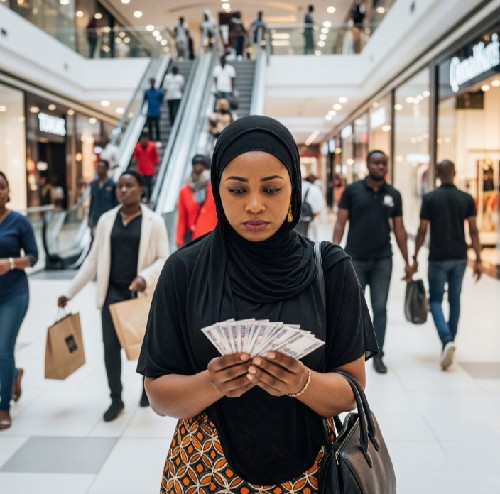
The Naira’s Never-Ending Tumble: Why Your Money Keeps Buying Less
It feels like a story we’ve heard a thousand times. You check the news, and the numbers are there again. On Friday, the naira took another small step back. It slipped. It weakened. It depreciated.
These are the gentle words we use for a harsh reality: the money in our pockets, in our bank accounts, is losing its power. The recent figures tell the tale clearly. In the market on the street, what we call the parallel or black market, a single US dollar now costs you around ₦1,538. Just the day before, it was a little cheaper at ₦1,535.
It’s not just on the streets. The official market, the Nigerian Foreign Exchange Market (NFEM), tells a similar story. There, the price for a dollar also went up, moving from ₦1,503 to about ₦1,503.50.
The Central Bank of Nigeria (CBN) confirmed these numbers. The gap between the official rate and the street rate is now about ₦32 for every dollar. This might seem like a small change, just a few naira here and there. But these small changes, day after day, add up to a very big problem for all of us. They affect the price of the bread we buy, the fuel we put in our cars, and the dreams we have for our families. Let’s break down what is really happening to our naira and why it matters so much.
Two Markets, One Big Headache
Imagine there are two different stores in your neighborhood that sell the exact same brand of milk. One is a big, official supermarket. It has a price tag set by the company that makes the milk. The other is a small corner shop. The owner of this shop sets his own price based on how many people want the milk and how much of it he has. If the supermarket runs out of milk, everyone rushes to the corner shop, and the owner, seeing the high demand, will likely increase his price.
This is a simple way to understand Nigeria’s foreign exchange markets. The “supermarket” is the official market (NFEM). This is where big businesses, the government, and some individuals can legally buy dollars at a rate that is tracked and published by the CBN. The “corner shop” is the parallel market, also known as the black market. This is where most everyday people and small businesses go to get dollars because the process is quicker and there are fewer restrictions.
When there aren’t enough dollars in the official supermarket, people rush to the corner shop. This high demand in the parallel market is a major reason its rate is almost always higher.
The ₦32 gap we see now between the two markets is called the spread or premium. As financial analyst Kalu Aja often points out, “A wide gap between the official and parallel markets is a sign of pressure and scarcity. It tells you the official supply is not meeting the real demand.” When this gap is wide, it creates confusion and uncertainty in the economy, making it hard for anyone to plan.
Read & Shop: Our Premium Abacha (Custard Packs) Worldwide Now.
So, Why Is the Naira Falling?
Thinking about why the naira is struggling is like trying to solve a puzzle with many pieces. There isn’t just one single reason; it’s a combination of several big challenges our country is facing.
The Thirst for Dollars
At the heart of the problem is a simple case of supply and demand. Nigeria needs a lot of US dollars, but we don’t earn enough of them. Think about it. We import so many things: cars, phones, computers, machinery for our factories, and even gasoline. To pay for all these imports, we need dollars. Our biggest way of earning dollars is by selling crude oil. For many years, we relied heavily on oil money.
Read & Shop: Our latest Top-Quality 100% Natural Nigerian Made Food Products.
However, as the CEO of Financial Derivatives Company, Bismarck Rewane, has explained in several reports, our oil production has sometimes been low due to theft and other issues. This means fewer dollars are coming in. So, we have a huge appetite for dollars to pay for imports, but our main source of earning them has been shaky.
It’s like having very expensive taste but your salary just got cut. You have more month than money. This scarcity is the primary reason the price of the dollar keeps going up. More people are chasing fewer available dollars.
The Inflation Monster
Another piece of the puzzle is inflation. Inflation is the rate at which the prices of goods and services are rising. When prices for everyday items in Nigeria go up, the value of the naira goes down. You need more naira to buy the same things you bought yesterday. This weakens our currency.
High inflation makes people nervous. Some who have savings prefer to change their naira into dollars because they feel the dollar is a more stable way to store their wealth. This act of changing naira to dollars further increases the demand for dollars, putting even more pressure on the exchange rate. It’s a tough cycle to break.
Policies and Trust
The decisions made by the Central Bank of Nigeria also play a huge role. In the past, the CBN has tried different methods to control the exchange rate. Sometimes they would try to fix the rate, and other times they would restrict access to dollars for certain imports. While these policies are often done with good intentions, they can sometimes create more problems.
When people feel it’s too difficult to get dollars from the official market, they are forced to go to the parallel market, pushing the rate there even higher. Recently, the CBN has moved towards a “willing buyer, willing seller” model, which allows the rate to be set more by market forces. The goal is to unify the two rates and bring more stability. However, this process takes time, and in the short term, it can lead to the kind of instability we are seeing now.
What This Means for You and Me
These big economic ideas and numbers are not just for newspapers and experts. They have a real, direct impact on our daily lives in ways that we can all feel.
Let’s think about a small business owner, let’s call her Mrs. Adebayo, who runs a boutique and imports clothes to sell. When the naira weakens, the cost of buying those clothes in dollars goes up instantly. If she used to spend ₦1 million to import a batch of dresses, she might now need ₦1.5 million to buy the exact same batch. To stay in business, she has no choice but to increase the price of the dresses in her shop.
So, when you go to buy a dress, you find that the price has shot up. This is not because Mrs. Adebayo is greedy; it’s because her costs have risen.
This same story applies to almost everything. The baker who uses imported flour and sugar for his bread will increase his prices. The transporter who buys spare parts for his bus will have to charge more for fares. Even the farmer in a village who uses fertilizer (which is often imported) will see his costs go up, and this will affect the price of yams and tomatoes in the city. The end result is that the purchasing power of our salary keeps shrinking. The ₦50,000 you earn today simply doesn’t stretch as far as it did last year.
Read & Shop: Our Premium Grade Cashew Nuts (400g) Pack Globally Now
For families with children studying abroad, the pain is even sharper. A student whose tuition was $
Today, at over ₦1,500/$, that same $10,000 tuition now costs over ₦15 million. This is a nightmare for parents, forcing many to make heartbreaking decisions.
Where Do We Go From Here?
Watching the naira’s value fall can feel discouraging, like we are stuck in a storm with no end in sight. The government and the CBN are trying to steer the ship. They are working on ways to earn more dollars, such as by promoting non-oil exports.
Imagine if we could sell more of our cocoa, cashews, and finished goods to other countries. This would bring in more dollars and ease the pressure.
They are also trying to manage the demand for dollars. One way is by encouraging us to produce more of what we need right here in Nigeria. If we can refine our own fuel and manufacture more of our own goods, our need to import them will reduce, and so will our demand for dollars. These are long-term solutions that require a lot of work and patience.
In the short term, the CBN is trying to clear the backlog of demand for dollars in the official market and build trust so that more people use the official window. The journey to a stable naira is a marathon, not a sprint.
For now, we are all feeling the pinch of these adjustments. Understanding the ‘why’ behind the naira’s slide doesn’t make our money more valuable, but it helps us understand the forces shaping our lives. It reminds us that behind the headlines and the numbers are the real stories of our struggles, our resilience, and our hope for a better economic future.
About The Author